
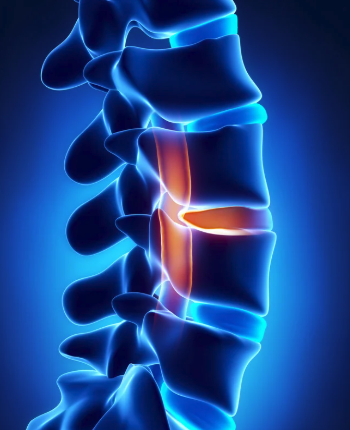
What Is an Intervertebral Disc Herniation?
Quick Summary: An intervertebral disc herniation occurs when the tough, fibrous outer ring of a spinal disc (annulus fibrosus) tears or ruptures, allowing the soft, jelly-like inner core (nucleus pulposus) to extrude into the spinal canal or neural foramen. This mechanical displacement places direct, high-pressure compression on exiting spinal nerve roots and incites a severe chemical inflammatory reaction, triggering radiating nerve pain (sciatica), numbness, tingling, and motor weakness.
Whether an acute tweak while paddling out at the Atlantic Beach pier or years of sitting at a desk triggered it, a herniated or bulging disc can bring your active life to an immediate standstill. Simple daily movements—sitting in your car, bending over to tie your shoes, or coughing—can send sharp, electric shocks traveling down your glute, hamstring, or calf.
When you consult a conventional spine clinic, the typical recommendations follow a predictable trajectory: heavy non-steroidal anti-inflammatories (NSAIDs), muscle relaxers, invasive epidural steroid injections, or spinal microdiscectomy surgery.
Steroid injections deliver a temporary anti-inflammatory wash and surgery permanently alters spinal biomechanics, but neither heals the underlying damaged disc fibers. Our Atlantic Beach clinic utilizes an advanced, non-surgical neuro-structural protocol that relieves nerve compression, speeds up deep annular tear healing, and restores normal spinal loading.
Cortisone Injections vs. Spinal Surgery vs. Our Integrated Disc Protocol at Foundational Health
Before consenting to invasive spinal procedures, it is critical to compare how conventional options measure up against advanced, non-invasive disc restoration:
The Pathophysiology: Why Herniated Discs Fail to Heal on Their Own
                 Asymmetrical Mechanical Loading & Spinal Fixation
                                        │
                                        ▼
                  Micro-Tearing of the Outer Annulus Fibrosus
                                        │
                 Nucleus Pulposus Extrudes Into the Neural Canal
                                        │
                 ┌──────────────────────┴──────────────────────┐
                 ▼                                             ▼
     Physical Nerve Compression                  Chemical Radiculitis (Spill of
  (Numbness, Weakness, Foot Drop)               Phospholipase A2 & Cytokines)
                 │                                             │
                 └──────────────────────┬──────────────────────┘
                                        ▼
      Hypoxic Tissue Trap: Zero Direct Blood Supply Prevents Natural Healing
1. The Avascular Dilemma
The intervertebral disc is the largest avascular structure in the human body. Beyond late adolescence, spinal discs have no direct arterial blood supply. They rely entirely on a passive fluid exchange mechanism known as imbibition—fluid and nutrients diffuse into the disc through the cartilaginous vertebral endplates only when the spine moves through healthy, unhindered ranges of motion.
When a segment becomes mechanically locked or compressed, this diffusion halts. The damaged disc enters a state of chronic hypoxia and cellular starvation, leaving micro-tears in the annular wall unable to close and heal.
2. Dual-Action Nerve Pain: Mechanical vs. Chemical
Most people believe a herniated disc hurts solely because it is physically pinching a nerve. In reality, disc pain is a two-part assault:
-
The Mechanical Pinch: The extruded disc physically impinges on the sensory and motor branches of the thecal sac or exiting nerve root ( in the lumbar spine; in the cervical spine).
-
Chemical Radiculitis: The inner jelly (nucleus pulposus) contains intense inflammatory mediators, particularly Phospholipase A2, TNF-, and IL-6. When this fluid breaches the outer ring, it chemically burns the adjacent nerve root, producing the searing, hot-poker sensation characteristic of true sciatica.
Our 4-Phase Integrated Disc Restoration Protocol
We don’t rely on generic spinal manipulation that could aggravate an acute disc tear. We use a precise, four-stage protocol engineered to take pressure off the nerve and heal the disc from the inside out:
Phase 1: Precision Orthopedic & Neurological Mapping
-
Neurological Root Testing: Evaluating dermatomal sensory loss, deep tendon reflex integrity, and specific motor muscle strength (checking for early signs of foot drop or extensor hallucis longus weakness).
-
Biomechanical Assessment: Identifying pelvic unleveling, loss of cervical/lumbar lordosis, and compensatory antalgic postures that are driving abnormal shear forces into the injured disc.
Phase 2: Gentle Decompressive Neuro-Structural Alignment
-
Utilizing low-force, high-precision structural adjustments designed specifically for disc injuries (such as gentle flexion-distraction mechanics).
-
Creating negative intra-discal pressure to encourage the herniated nuclear material to retract away from the nerve root while pumping nutrient-rich fluid back through the vertebral endplates.
Phase 3: Deep-Tissue Class IV Laser Photobiomodulation
-
Applying high-power dual-wavelength laser light ( and ) to penetrate up to 10 centimeters deep into the spinal canal.
-
Photons absorb directly into damaged annular fibroblasts, accelerating ATP production and collagen synthesis to structurally knit the torn disc fibers back together.
-
Rapidly shuts down chemical radiculitis by deactivating Phospholipase A2 and flushing out trapped inflammatory edema.
Phase 4: Cellular Recharging (PEMF) & Muscular Stabilization
-
Pulsed Electromagnetic Field (PEMF): Recharges damaged, low-voltage nerve and disc cells, stimulating chondrocytes to maintain cartilaginous health.
-
Neuromuscular Re-Education: Activating deep dormant spinal stabilizers (multifidus and transverse abdominis) through progressive motor-control exercises, ensuring the spine holds its alignment under daily athletic and work demands.
Symptoms: Which Spinal Disc Pattern Fits Your Pain?
-
[ ] Lumbar Disc Herniation ( or ): Deep, aching lower back pain paired with sharp, electric shooting pain down the back of the leg (sciatica), numbness in the foot, or weakness when pushing off your toes.
-
[ ] Cervical Disc Herniation ( or ): Piercing pain between the shoulder blades, radiating numbness, tingling, or weakness traveling down the arm into the fingers.
-
[ ] The “Sitting Intolerance” Test: Sitting down or driving in a car causes sharp, intolerable worsening of your pain, while lying flat or standing provides mild relief.
-
[ ] Valsalva Flare: Sneezing, coughing, or bearing down instantly sends a sudden jolt of pain directly into your back, glute, or leg.
Frequently Asked Questions
Can a herniated disc heal without surgery?
Yes. Clinical research consistently shows that the majority of disc herniations can resolve non-surgically when the proper physiological conditions are created. By decompressing the mechanical pressure on the disc, reducing local chemical inflammation, and delivering cellular energy via photobiomodulation (Class IV laser), your body has the innate capacity to resorb the herniated material and structurally repair the outer annular wall.
Is chiropractic care safe for an acute disc herniation?
Yes, provided it is performed with specific, gentle, non-rotational methods. We never perform aggressive, high-velocity twisting adjustments on an acutely herniated or torn disc. We use specialized, low-force techniques, flexion-distraction decompression, and advanced therapies like Class IV laser and PEMF that are exceptionally gentle and safe for acutely inflamed nerve roots.
How does Class IV laser therapy heal a torn disc?
Because discs lack direct blood vessels, they struggle to produce the cellular energy (ATP) needed to repair tears in their tough outer ring. Class IV laser light penetrates deep into the spinal column, where it is absorbed by mitochondria. This stimulates an immediate surge in ATP, drives micro-vascular circulation, down-regulates inflammatory cytokines, and accelerates the synthesis of type I and type II collagen needed to patch the torn disc wall.
How many sessions does the disc recovery protocol take?
While acute radiating nerve pain often diminishes substantially within the first 4 to 6 sessions, comprehensive structural remodeling of a spinal disc typically takes between 8 to 12 weeks of structured, phased care. This ensures the annular tear has sealed, the surrounding muscles have regained motor control, and the risk of re-injury is minimized.
Stop Living with Radiating Nerve Pain. Rebuild Your Spine Today.
You don’t have to accept endless painkillers, repeated steroid shots, or irreversible spinal surgery as your only options. By removing mechanical nerve pressure and supercharging your cellular disc repair, you can heal naturally and return to the active, pain-free Florida lifestyle you love.

Dr. James Roman, DC
Functional Medicine Provider
Author of “The Foundational Breakthrough”
25 Years Clinical Experience
25 Years Clinical Experience
Clinical Disclaimer
Educational Purposes Only: The information provided in this article is for educational and informational purposes only and is not intended as medical advice, diagnosis, or treatment.
No Doctor-Patient Relationship: Accessing this content, subscribing to this newsletter, or interacting with this website does not establish a doctor-patient relationship with Dr. James Roman or Foundational Health.
Consult Your Provider: Always seek the advice of your physician or other qualified health provider with any questions you may have regarding a medical condition. Never disregard professional medical advice or delay in seeking it because of something you have read on this platform. If you are experiencing a medical emergency, please call 911 or your local emergency services immediately.